Menu
Ensuring Long-Lasting Concrete Pours in Hollywood, FL
Pouring Concrete Hollywood
Using concrete in Hollywood involves much more than just using construction techniques as you would elsewhere; it demands an exact, precise science and process. The harsh elements of our climate (high heat, high humidity, corrosive salt-laden air) affect how well the product will perform over time and ultimately determine its long-term life. A good concrete job that has been built to last will have every detail, from the mix design to curing, done precisely so that you can enjoy your investment for many years to come.
Designing and Controlling the Mix and Workability
Long-term durability begins with a good design for the mix. Regardless of what type of concrete pour project you have in Hollywood, California, the mix needs to be designed so that the ratio of water to cement (w/c) is as low as possible. A lower w/c ratio will result in a denser concrete with fewer voids and less pore space, resulting in less permeable concrete. This will help to keep the water and other corrosive chloride ions from entering the concrete and making their way to the internal steel reinforcing bars.
We typically use fly ash or slag as additional cementitious materials in our mixes because they both add to the strength of the concrete and decrease the amount of porosity of the concrete.
Workability or Consistency of the Fresh Concrete
To ensure that the concrete has the right amount of workability to maximize its strength and to make it easier to place and finish, we need to control how much water is added to the mix. Too little water and the mix will be too stiff and difficult to place and finish. Too much water and the mix will be too wet and weak, and the aggregate particles will segregate (separate). The slump test measures the workability of the concrete. A slump of about 5 inches is typical for most construction projects in the Los Angeles area.
The Weather in Hollywood Can Cause Problems With Pouring Concrete
Because of the warm and windy conditions in Hollywood, California, there are several issues that can arise when pouring concrete. First, the warmer ambient temperature will cause the concrete to set faster, which can lead to “flash setting.” Flash setting causes the concrete to set almost immediately after being poured, which leaves no time to finish or even to get the surface ready for finishing. Second, the wind and low relative humidity in the area can cause fast surface evaporation of the moisture on the surface of the fresh concrete. Fast evaporation of the moisture on the surface of the fresh concrete can lead to “plastic shrinkage” cracking of the surface of the concrete before the concrete has a chance to set.
Our company uses two methods to try to mitigate some of these problems. The first method is to schedule the pour for the coolest part of the day. The second method is to use a set retarding admixture in the concrete. The set retarders slow down the rate of hydration of the concrete, which gives us more time to finish and prepare the surface for finishing.
Concrete Placement Techniques and Equipment
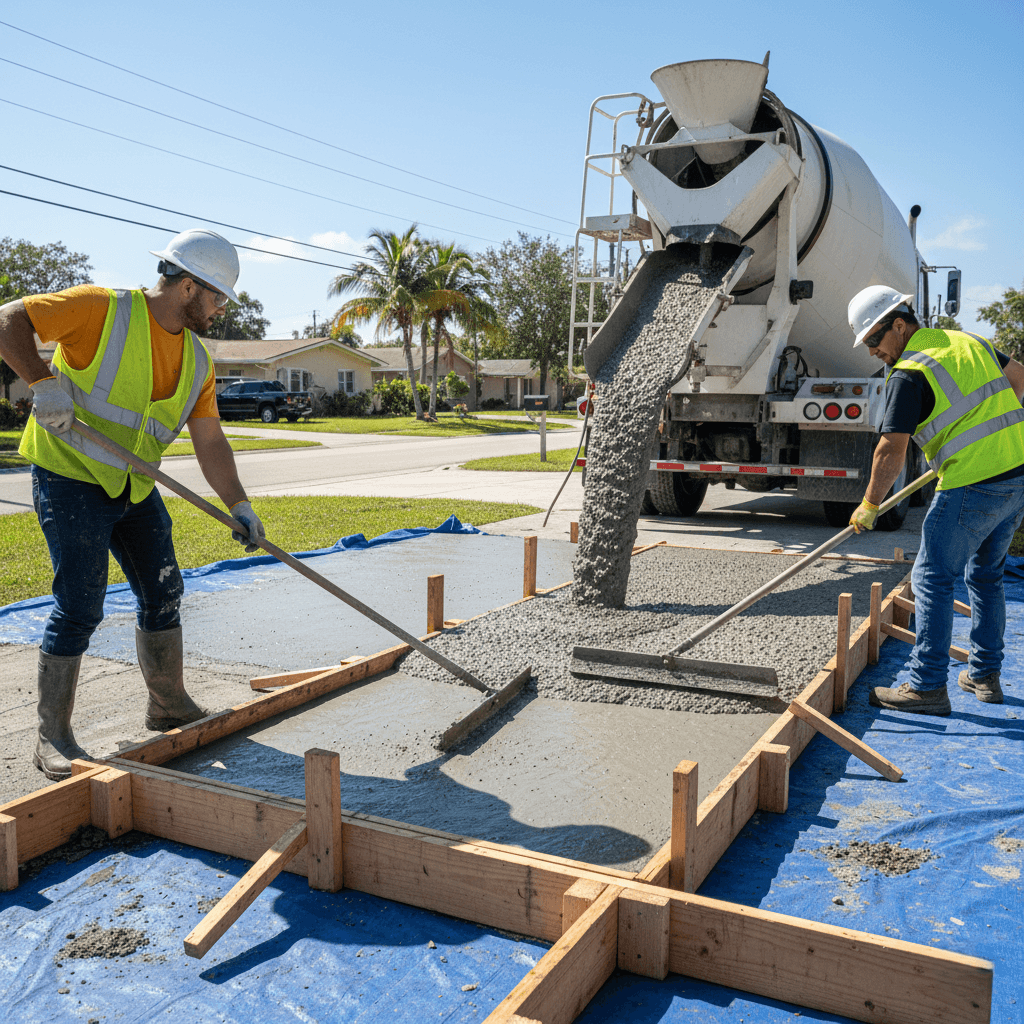
Pouring concrete is more than just dumping the material into the form. It is a controlled placement and consolidation operation. To minimize the potential for horizontal migration of the concrete and subsequent segregation of the aggregates, the concrete should be placed as close to its final location as possible. The concrete should be placed in uniform layers to the same depth across the entire pour area.
After the concrete has been placed, the air bubbles that were trapped in the fresh concrete must be removed. This is called consolidating the concrete. The most common equipment used to consolidate the concrete is a mechanical vibrator. If the concrete is consolidated properly, the air bubbles will be removed from the concrete, which will improve the long-term strength of the concrete and prevent the easy entry of water and chlorides into the concrete. However, if the concrete is vibrated too aggressively, the heavier aggregates will settle and potentially compromise the structural integrity of the concrete.
Curing Methods
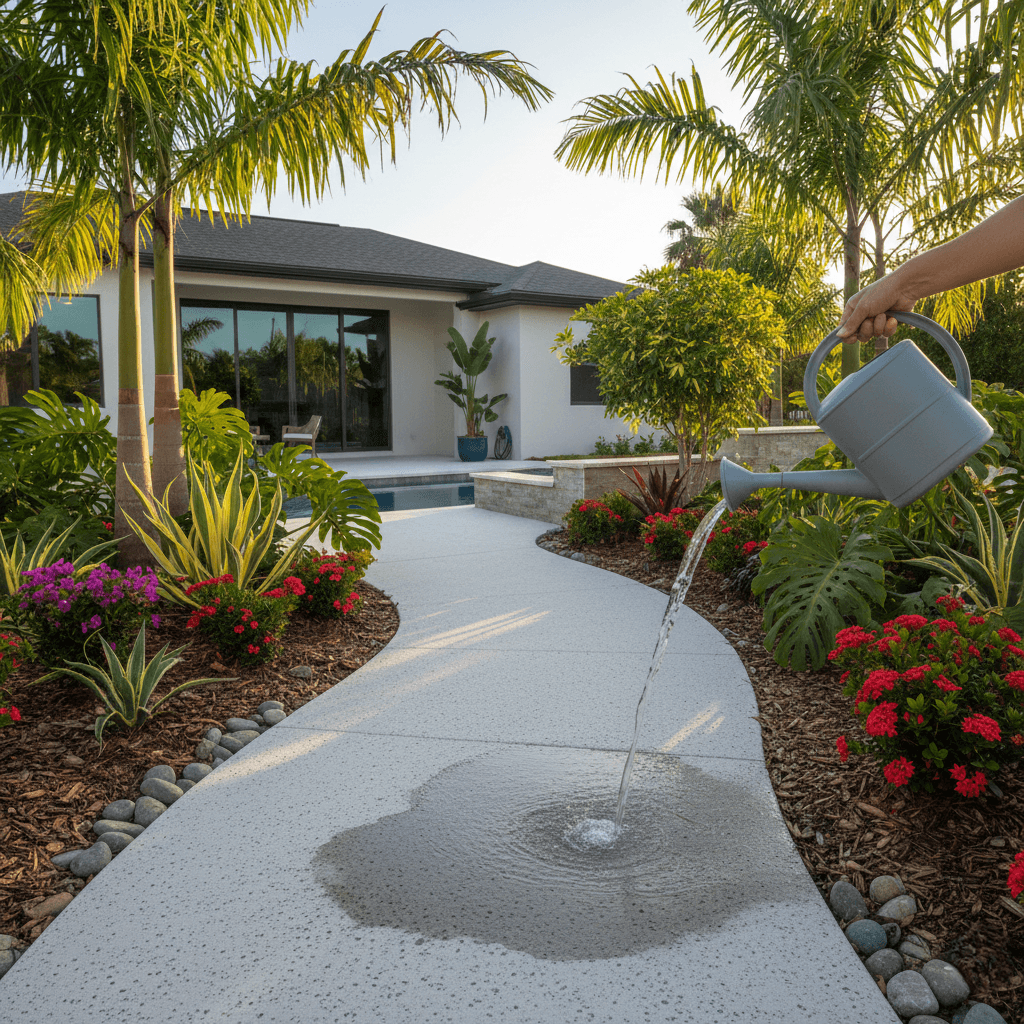
Curing is probably the most important aspect of ensuring that the poured concrete reaches its maximum strength and durability. Curing is not simply allowing the concrete to dry out. Rather, it is the process of providing the correct amount of moisture and temperature to the concrete so that the cement paste within the concrete can continue to hydrate and develop its full strength.
For at least 7 days, and preferably longer, the freshly poured concrete must be kept moist to prevent premature drying. In Hollywood’s warm climate, we typically use one of two methods to cure the concrete. Either method prevents the water contained within the concrete from evaporating too quickly. The first method is to continuously spray water onto the surface of the concrete. The second method is to apply a liquid membrane-forming curing compound to the surface of the concrete. Both of these methods will allow the cement paste to reach its maximum compressive strength.
If the concrete does not receive the necessary amount of moisture and temperature to continue to hydrate, then the final strength of the concrete will be severely compromised. Therefore, investing the necessary time and effort to properly cure the concrete is crucial.
Methods for Preventing Cracking
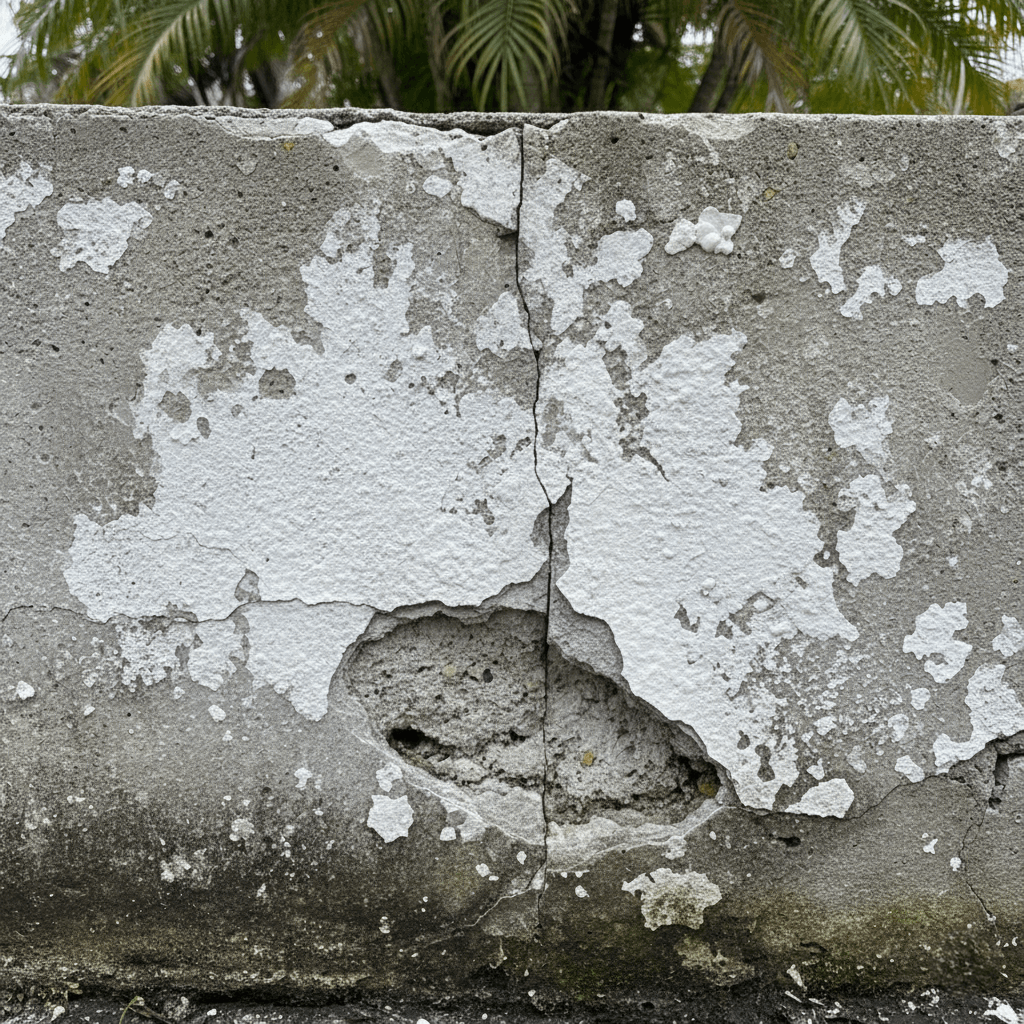
Although we take great care to avoid cracking in the concrete, it is inevitable. As the concrete dries and shrinks, it will experience stress caused by the difference in thermal expansion between the different components of the concrete. If these stresses become too severe, the concrete will crack.
By strategically placing control joints in the concrete surface, we can manage where the cracks occur. Control joints are either saw-cut or grooved into the surface of the concrete after it has finished curing. They serve as predetermined weak points in the concrete, so when the concrete experiences stress and eventually cracks, it will do so under the control joint rather than randomly.
When placing control joints, it is recommended that they be sawed or grooved to a depth of at least 1/4 of the thickness of the slab. Additionally, they should be spaced strategically to distribute the stress evenly.
Isolation Joints Must Also Be Placed Strategically
In addition to control joints, isolation joints must be installed to separate the new concrete pour from adjacent structures such as foundation walls, columns, etc. Isolation joints are required to prevent the transfer of stresses from the new pour to the adjacent structures.
If isolation joints are not installed correctly, it will result in random and large-scale cracking of the surface of the concrete. Such cracking will detract from the aesthetic appeal of the concrete and significantly impact its strength and durability.
Finishing the Surface
Both the quality of the finish of the concrete surface and the durability of the surface are directly affected by the timing and technique of the finishing process. Finishing the surface of the concrete too early or too late can create problems. If the surface is finished too early, it may not have enough time to relax and release any stresses that developed during the finishing process, leading to surface defects. On the other hand, if the surface is finished too late, it may have dried out and become too hard to finish smoothly.
At King Concrete Hollywood, we specialize in achieving a variety of finishes depending on the desired outcome. Interior floors can be completed with a smooth-troweled finish, while exterior walkways and driveways are finished with a light broom finish to provide traction.
Protecting the Final Surface
Regardless of whether the surface of the concrete has a decorative finish or is left plain, every exterior surface in Hollywood should be sealed once it has cured. The sealing of the surface helps protect it from damage caused by water, chlorides, and UV rays. Penetrating sealers are ideal for protecting the surface of the concrete since they penetrate deep into the pores of the concrete without leaving behind a film. Protecting the surface of the concrete with a high-quality penetrating sealer is the final step in preserving the low permeability that was established when the initial concrete mix was properly designed. Regular maintenance of the sealer is the last line of defense against long-term degradation of the concrete.
LATEST POSTS